English| EUR
Suggested for you
More currencies
Choose a language
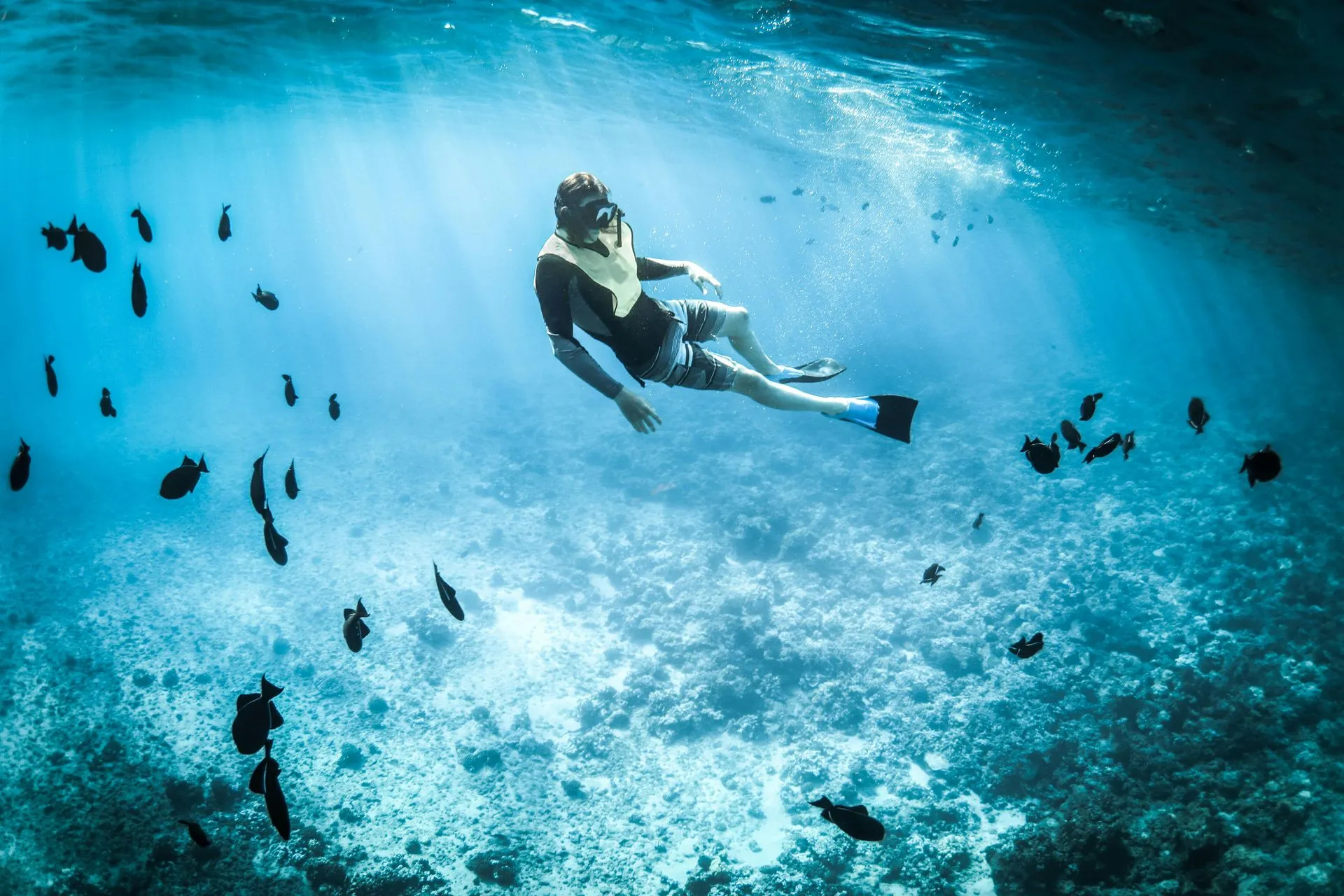
Jupiter's clear Atlantic waters host nurse sharks, blacktips, and occasional reef sharks year-round. Most encounters last seconds and end without incident when snorkelers follow the established response protocol. The difference between a safe sighting and a dangerous situation comes down to movement pattern and body language.
Quick answer
If you see a shark while snorkeling in Jupiter, stop moving immediately and remain vertical in the water. Maintain eye contact with the animal and avoid splashing or rapid movements. Begin moving slowly and steadily toward shore or your boat, keeping the shark in your line of sight. Do not turn your back or swim directly away at speed—predatory fish key on fleeing motion.
Nurse sharks rest on the sandy bottom near Jupiter Beach Park in numbers that surprise first-time snorkelers. They lie motionless in depths of eight to fifteen feet, sometimes stacked in groups of three or four, and most will not move unless touched. Blacktip reef sharks patrol the surf line during mullet runs in spring and fall, and reef sharks cruise the ledges a quarter-mile offshore where the limestone shelf drops into blue water. All three species are common in Jupiter, and all three trigger the same human panic response despite differing levels of actual risk. Knowing what to do if you see a shark while snorkeling begins with understanding what the animal perceives. Sharks lack eyelids and must keep moving to breathe, so they read movement as the primary signal of prey or threat. A snorkeler thrashing at the surface resembles an injured fish—exactly the profile that activates hunting behavior in predatory species. Vertical posture signals size and intent; horizontal posture signals vulnerability. Eye contact communicates awareness, and awareness removes the element of surprise that most predators rely on. These cues matter more than species identification in the moment of encounter. The protocol is sequential. Stop all forward motion the instant you register the animal. Draw your arms and legs into a compact vertical position and locate the shark visually. If it is swimming parallel or away, maintain your position and let it pass. If it approaches or circles, face it directly and track its movement without breaking eye contact. Begin your exit only after the shark has established distance or lost interest, moving in smooth strokes without kicking at the surface. Splashing activates lateral line sensors from thirty feet away. Most encounters in Jupiter's nearshore zone resolve within fifteen to thirty seconds once the snorkeler stops transmitting prey signals. Lifeguards at Jupiter Beach Park are on duty from morning through early evening and monitor the surf zone from elevated towers. The phone line to the main station is operational during all posted hours, and staff are trained in marine animal interaction protocol. Shark activity peaks during baitfish migration windows and dawn or dusk feeding periods, though sightings occur at any hour when conditions bring fish close to shore. The reef structure and Gulf Stream proximity make Jupiter one of the most reliable shark habitats on Florida's Atlantic coast, which also makes it one of the best places to practice calm, controlled responses when you see a shark while snorkeling.
“Vertical posture signals size and intent; horizontal posture signals vulnerability.”
If you encounter a shark while snorkeling in Jupiter's waters, following a calm, methodical response protocol significantly reduces risk and ensures a safe exit. These steps take 2–5 minutes from sighting to reaching shore or your boat.
Stop all sudden movements the moment you spot the shark. Erratic splashing can trigger curiosity or predatory interest, while stillness signals you are not prey.
Keep your mask facing the shark and track its position continuously. Sharks typically investigate from the front and are less likely to approach an aware observer.
Begin moving toward shore or your vessel using controlled, steady fin kicks. Keep your body vertical or angled rather than horizontal to appear larger and less fish-like.
Continue facing the shark as you retreat, rotating your body if the animal moves laterally. Loss of visual contact increases risk of a closer approach or investigative bump.
Once you have distance or reach shallow water, calmly alert your group, guide, or lifeguard on duty. Jupiter Beach Park maintains lifeguard coverage from 09:00–17:20 daily for immediate assistance.
Swim steadily to shore or climb aboard your boat without splashing. Rapid, chaotic movements near the surface can attract attention from other marine life in the area.
The safest time for snorkeling in Jupiter is within the 09:00–16:00 window, as this period provides optimal water visibility for spotting marine life and ensures lifeguard coverage. Planning your visit during these hours allows for the most controlled and observable environment.
Clear visibility
Lifeguards are on duty and high sun angles improve underwater clarity.
Cooler water; 70-75°F
Shark migration patterns may increase activity; use caution.
Warm water; 80-85°F
Visibility can vary; prioritize snorkeling when lifeguards are present.
Verdict: Visit between 09:00–16:00 during the spring or fall months for the best combination of water visibility and lifeguard availability.
Jupiter Beach Park is open daily to the public for snorkeling and other recreational activities. The park maintains consistent operating hours throughout the week.
Jupiter Beach Park is located at 1375 S A1A, Jupiter, FL 33477. The most direct approach is by car via S A1A, which offers convenient access to the park's designated parking areas.
S A1A to Jupiter Beach Park
Direct drop-off at 1375 S A1A
Access via beach path from S A1A
Plan to arrive between 09:00 and 16:00 to ensure lifeguards are on duty and to utilize the best visibility conditions during mid-day light.
Everything you need to know about what to do if you see a shark while snorkeling
If you encounter a shark, remain calm and keep the animal in your sight while slowly backing toward the shore or a boat. Avoid erratic movements and do not provoke the creature, as understanding what to do if you see a shark while snorkeling is key to a safe experience. It is natural to see various fish and occasionally larger marine life in the clear waters off the Florida coast. Maintaining distance is the most important rule for safe snorkeling. You should never swim toward a shark; instead, move away smoothly without splashing or turning your back on it. Rapid, frantic swimming can trigger a predatory response, which is why knowing what to do if you see a shark while snorkeling involves maintaining steady, controlled movements. Mid-day light offers the best underwater visibility, making it easier to spot marine life early. Swimming during the recommended window of 09:00–16:00 helps you stay alert in well-lit conditions. Lifeguards are on duty at Jupiter Beach Park during operational hours to monitor the water and assist with public safety. If you observe any concerning wildlife, notify a lifeguard on duty immediately. If you have children in the water, keep them close to you at all times. Prioritize exiting the water calmly if a shark is sighted, as knowing what to do if you see a shark while snorkeling ensures everyone stays composed. When snorkeling near reefs or rocky structures, maintain high awareness of your surroundings. If an encounter occurs, prioritize a slow retreat to shallow water while keeping your gear and body positioned defensively.